




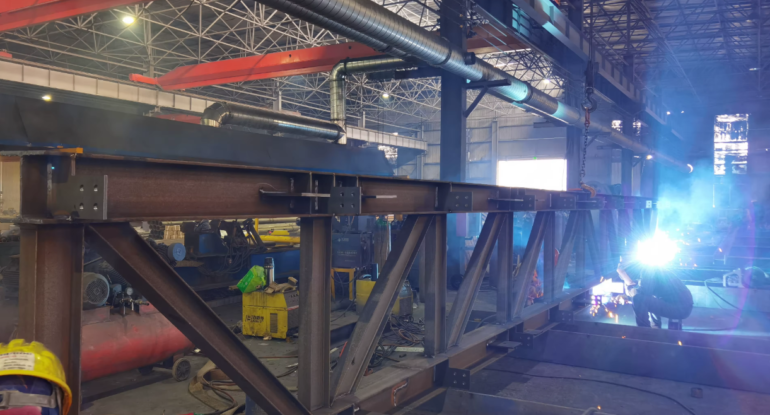
Steel structure buildings continue to increase due to their unique advantages, steel structure components now appear more frequently in industrial and commercial projects.
Rapid market growth drives higher requirements for product quality and manufacturing standards. Understanding steel structure production processes helps buyers select reliable products and suppliers. This knowledge also reduces project risks and long-term maintenance costs.
Layout and Marking of Steel Structure Components
Layout represents the first step in steel structure fabrication. Accurate layout prevents cumulative errors during later processing stages. Precise layout ensures overall component quality and dimensional accuracy.
Layout work includes checking installation dimensions and hole spacing on drawings. Workers draw joints at a 1:1 scale. They verify dimensions of each structural part. Technicians create templates and gauges for cutting, bending, and drilling.
Workers use geometric drawing methods on layout platforms at a 1:1 scale. After inspection confirms accuracy, technicians produce templates from steel plates. They mark job numbers, drawing numbers, part numbers, quantities, and hole diameters. Workers then perform marking based on these templates and gauges.
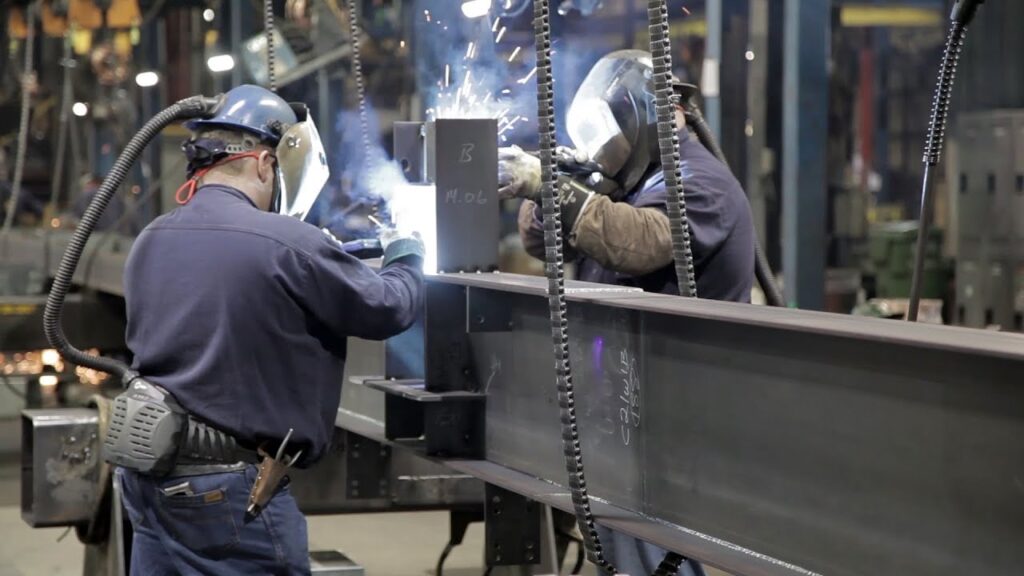
During marking, operators verify materials and processing positions. They mark cutting and drilling locations on the steel surface. They also label each part clearly. Workers store templates and gauges properly until project completion.
Key precautions require attention during layout. Workers must consider machining allowances for milling and planing. Welded components require allowances for welding shrinkage. Operators should optimize nesting to reduce material waste. Cutting methods determine the required cutting allowances.
Cutting of Steel Structure Components
Steel cutting methods include shearing, punching, sawing, and flame cutting. Cut steel must remain free from lamination defects. Cut surfaces must show no visible cracks. Workers must remove burrs, slag, and spatter from cut edges.
Flame cutting and mechanical shearing must meet allowable tolerance standards. Large manufacturers invest in advanced cutting equipment. Laser cutting machines improve dimensional accuracy significantly. Plasma cutting machines also enhance cutting efficiency. Advanced equipment reduces processing errors to within ±1 mm.
Straightening of Steel Structure Components
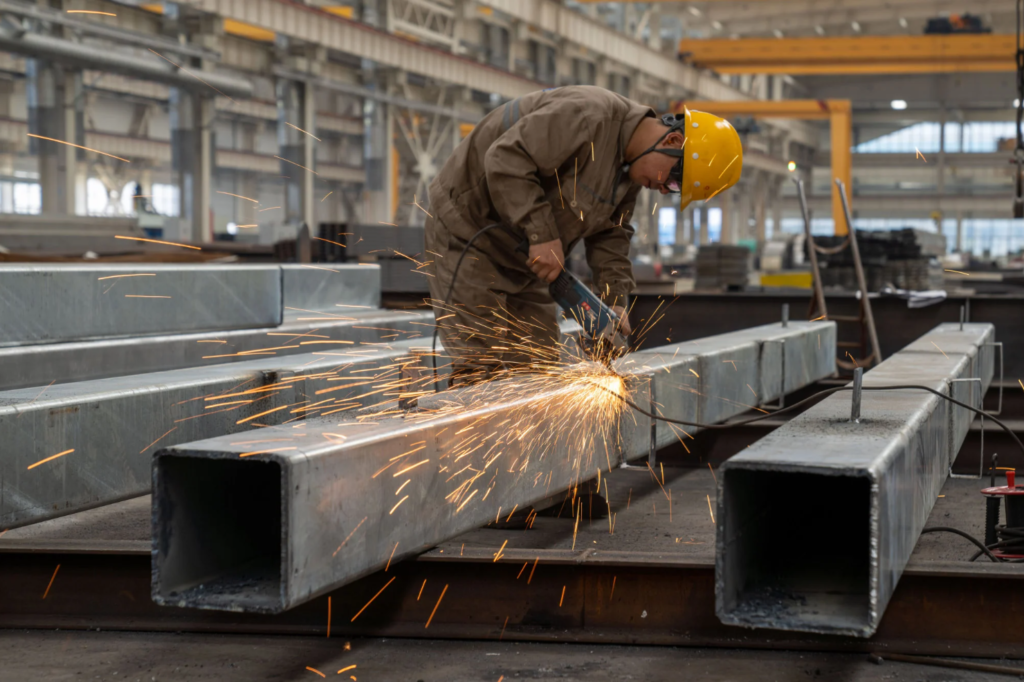
Steel components often deform during production and transportation. Material properties, cutting, welding, and handling cause these deformations. Deformation affects installation accuracy and structural performance. Straightening processes correct these deviations effectively.
Technicians straighten steel sections using mechanical or thermal methods. Mechanical straightening uses rolling machines or presses. Manual straightening applies controlled force by skilled workers. Flame straightening uses localized heating to correct deformation. Each method suits specific component shapes and deformation levels.
Edge Processing of Steel Structure Components
Shearing and flame cutting alter steel plate edge structures. Important components require edge processing to ensure performance. Steel beams and crane girders demand especially strict edge quality. Edge planing depth should not remain below 2 mm.
Proper edge processing improves welding quality and assembly accuracy. Workers machine plate edges into suitable grooves. Grooves support full weld penetration and joint strength. Accurate edge preparation also reduces welding defects.
Hole Making
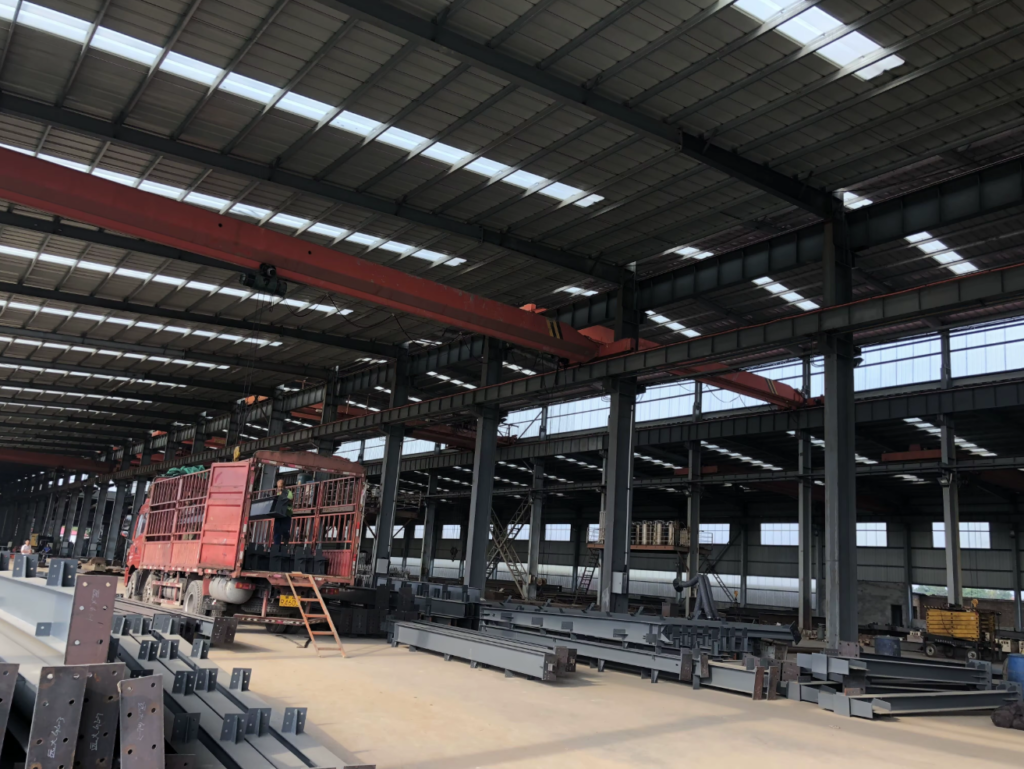
Hole making usually involves drilling or punching. Drilling remains the most common method in steel fabrication. Workers perform drilling manually or using drilling machines. Manual drilling suits thin plates and small hole diameters.
Drilling offers high precision and operational flexibility. Large manufacturers invest in advanced drilling equipment. Harbin Dongan Building Sheets uses 3D CNC drilling machines. These machines control processing errors within 0.5 mm.
Additional hole processing methods include reaming and countersinking. Reaming enlarges existing holes to required diameters. Countersinking modifies drilled holes for bolt head seating. Finish reaming improves surface roughness and dimensional accuracy.
Assembly
Assembly joins processed parts into complete components. Workers assemble components according to construction drawings. Component size depends on transport routes and site conditions. Lifting equipment capacity also influences component dimensions.
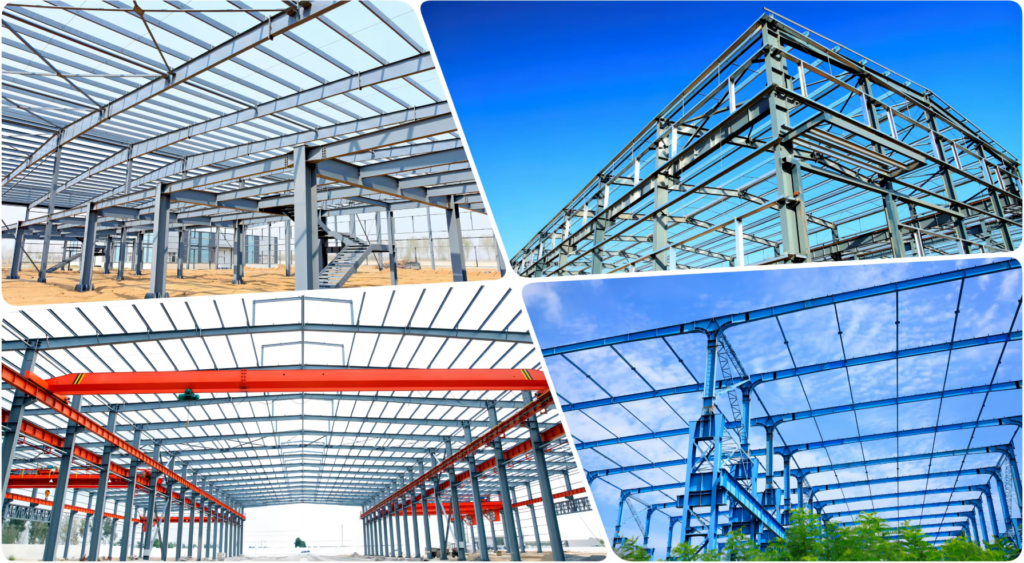
Assembly must follow specific requirements. Workers perform assembly operations on stable platforms. Technicians prepare assembly sequences before starting work. Workers assemble parts strictly according to identification numbers. They must check orientation for symmetrical components.
Large or complex components require segmented assembly. Workers assemble simple units before final integration. After assembly, technicians label components clearly. Clear identification supports transportation and installation efficiency.
Welding Operations
Welding serves as a primary connection method in steel structures. Arc welding dominates steel fabrication and installation projects. Common arc welding methods include manual, submerged, and gas-shielded welding. Special applications require electroslag welding.
Welding procedure development requires careful planning. Engineers select welding methods and parameters. They choose appropriate electrodes, wires, and fluxes.
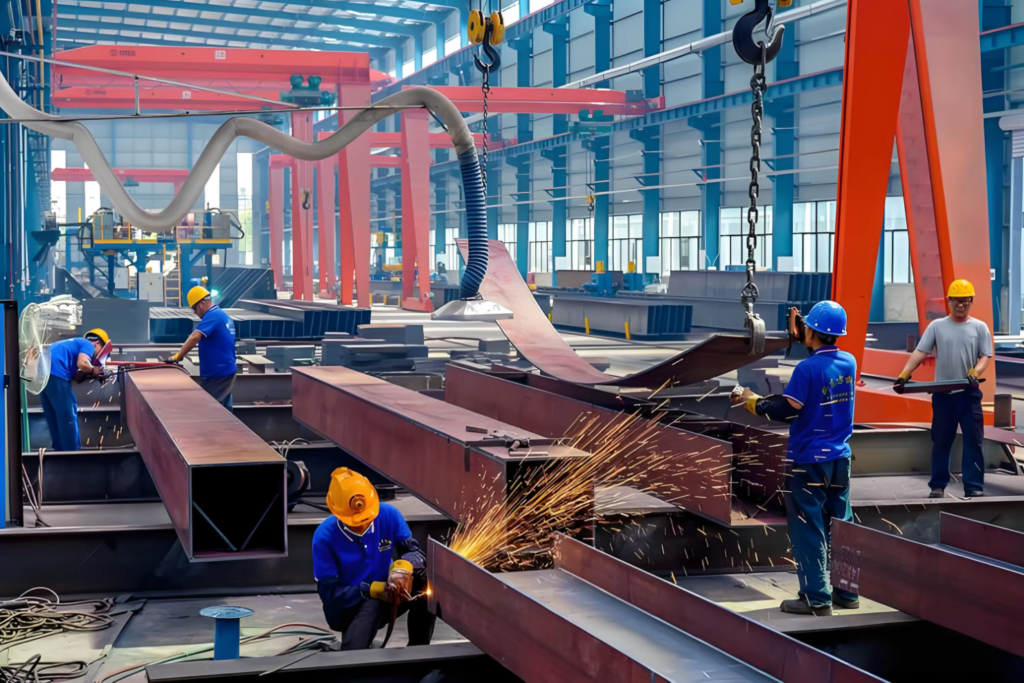
Manual arc welding positions include flat, vertical, overhead, and horizontal welding. Workers select suitable joint forms based on design requirements. Joint types include butt welds and fillet welds.
Position welding ensures accurate part placement. Technicians apply tack welds before full welding. Tack weld current exceeds final welding current by 10 to 15 percent. Workers avoid tack welding near stress concentration zones.
Preheating reduces cooling speed in heat-affected zones. Preheating prevents delayed cracking after welding. The preheated area extends beyond 1.5 times plate thickness. Minimum preheating width remains above 100 mm.
Welding sequence selection plays a critical role. Workers weld from the center outward. They weld high-shrinkage seams before low-shrinkage seams. Symmetrical welding reduces residual stress. Workers weld longitudinal seams before transverse seams. Thick plates require multi-layer welding.
Post-weld heat treatment removes hydrogen from welds. This treatment prevents cold cracking. Workers perform treatment immediately after welding. Holding time equals one hour per 25 mm thickness. Flame heating often supports preheating and post-heating.
Weld quality inspection includes appearance checks. Weld surfaces must appear uniform and defect-free. Inspectors reject cracks, slag inclusion, undercutting, and burn-through. Weld dimensions must meet design.
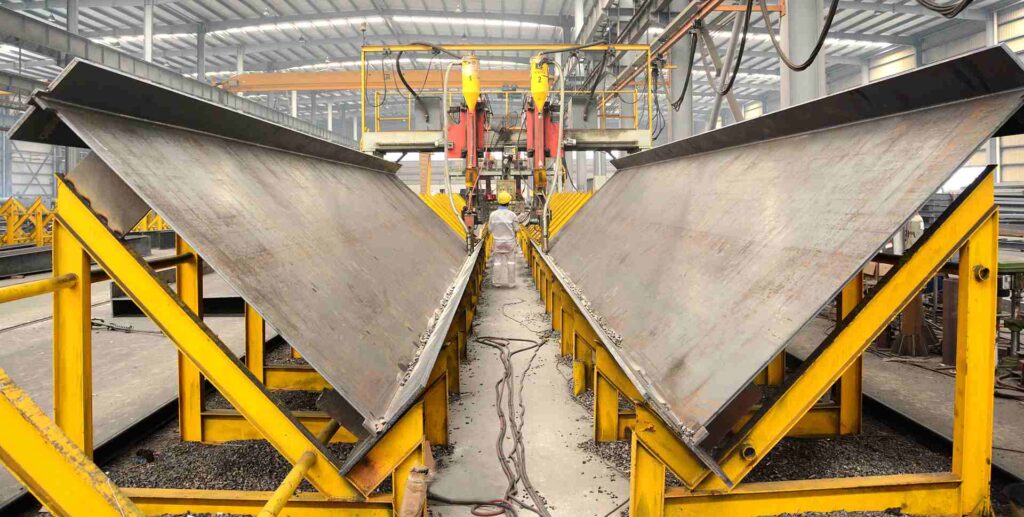
Non-destructive testing evaluates internal weld quality. Radiographic and ultrasonic testing detect internal defects.
High-Strength Bolt Connection
High-strength bolt connections serve as major steel structure joints. These connections offer convenience, reliability, and high load capacity. They provide uniform force transfer and strong fatigue resistance.
Bolts require performance reinspection before use. Workers handle bolts carefully during transport. Storage areas must remain dry and well ventilated.
Workers issue bolts according to daily requirements. Unused bolts must return to containers after work. Contact surfaces must remain clean and dry. Workers must avoid installation during rain.
Torque wrenches require daily calibration. Installation starts from the joint center and moves outward. Workers tighten bolts progressively. Bolt insertion directions must remain consistent.
Torque control tightening includes initial and final tightening stages. Initial torque reaches 60 to 80 percent of final torque. Final tightening ensures full bolt preload.
Through standardized processes and strict control, steel structure components achieve high quality. Proper manufacturing ensures safety, durability, and long-term structural performance.

Leave A Comment